Calendar
Be the best of yourself
光剑美高彰显在全球教育领域的卓越实力
 GUANGHUA ACADEMY >
 From the CTB Global Finals to Harvard Journals: Our Students Shine on the World Stage
Author:
Release Date:2026-04-30
Browse:1503order
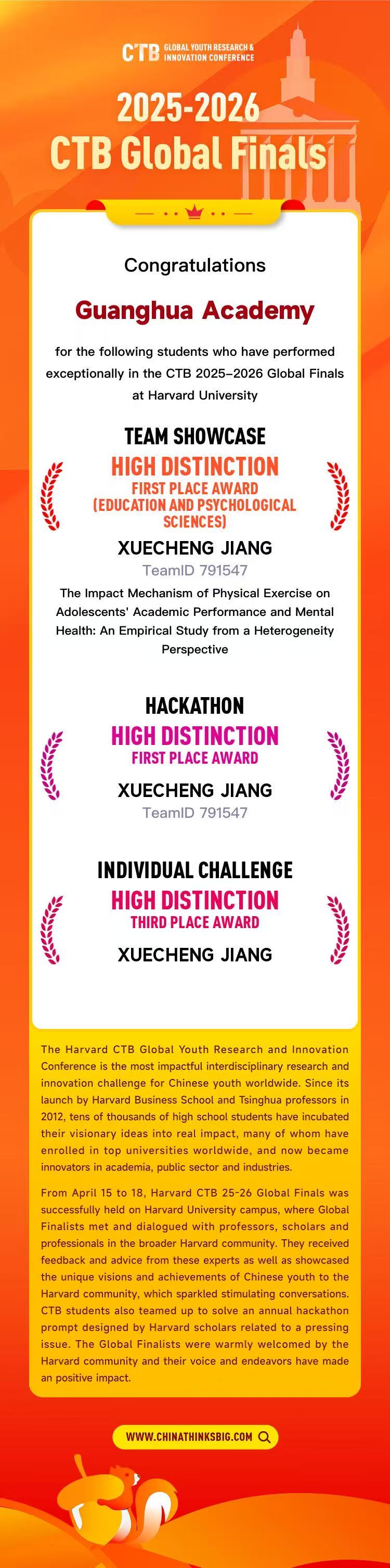
We are proud to congratulate Xuecheng (Henry) Jiang, a Grade 10 student at Raycom British High School, for his extraordinary performance at the CTB Global Youth Research and Innovation Forum (Harvard Global Finals). Henry delivered a standout presentation on the Harvard stage, securing multiple top-tier global awards.
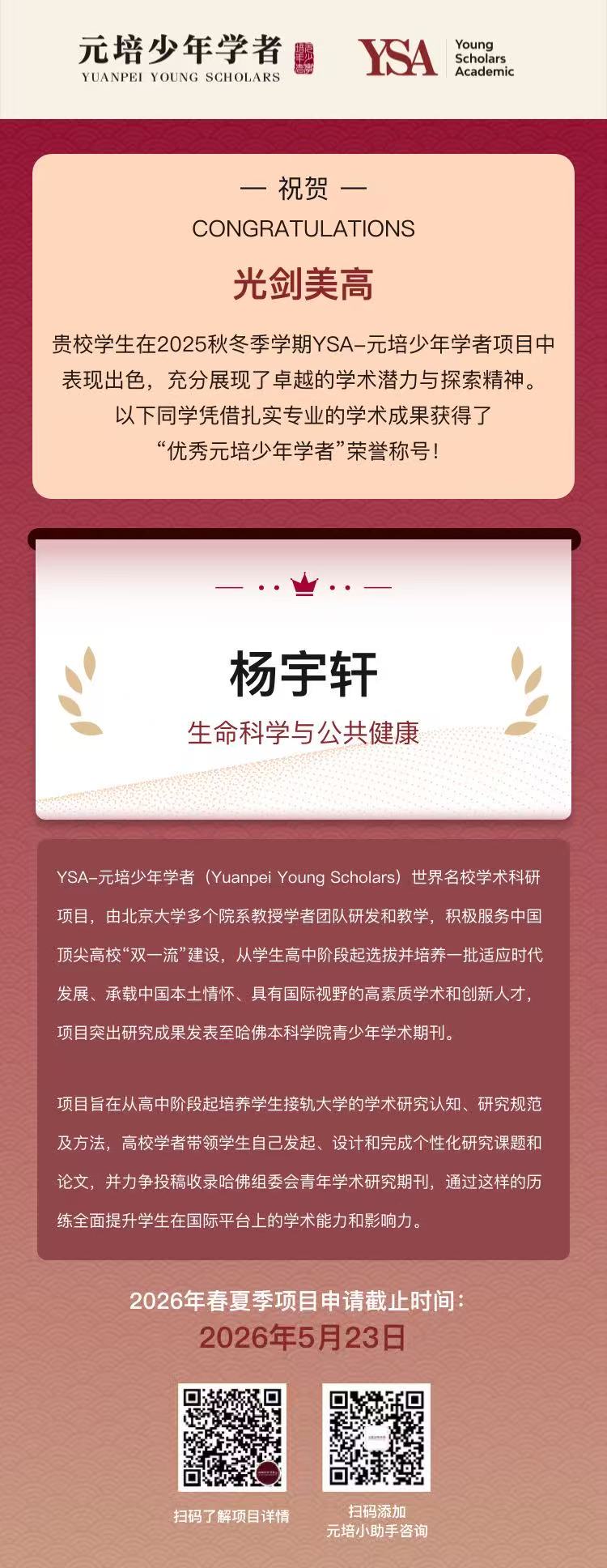
We also celebrate Grade 10 student Yuxuan Yang for his remarkable personal breakthrough in the YSA-Yuanpei Young Scholars Research Program, where his dedication earned him the prestigious "Outstanding Yuanpei Young Scholar" distinction.
Q: Could you describe your research topic and your specific role in the project?
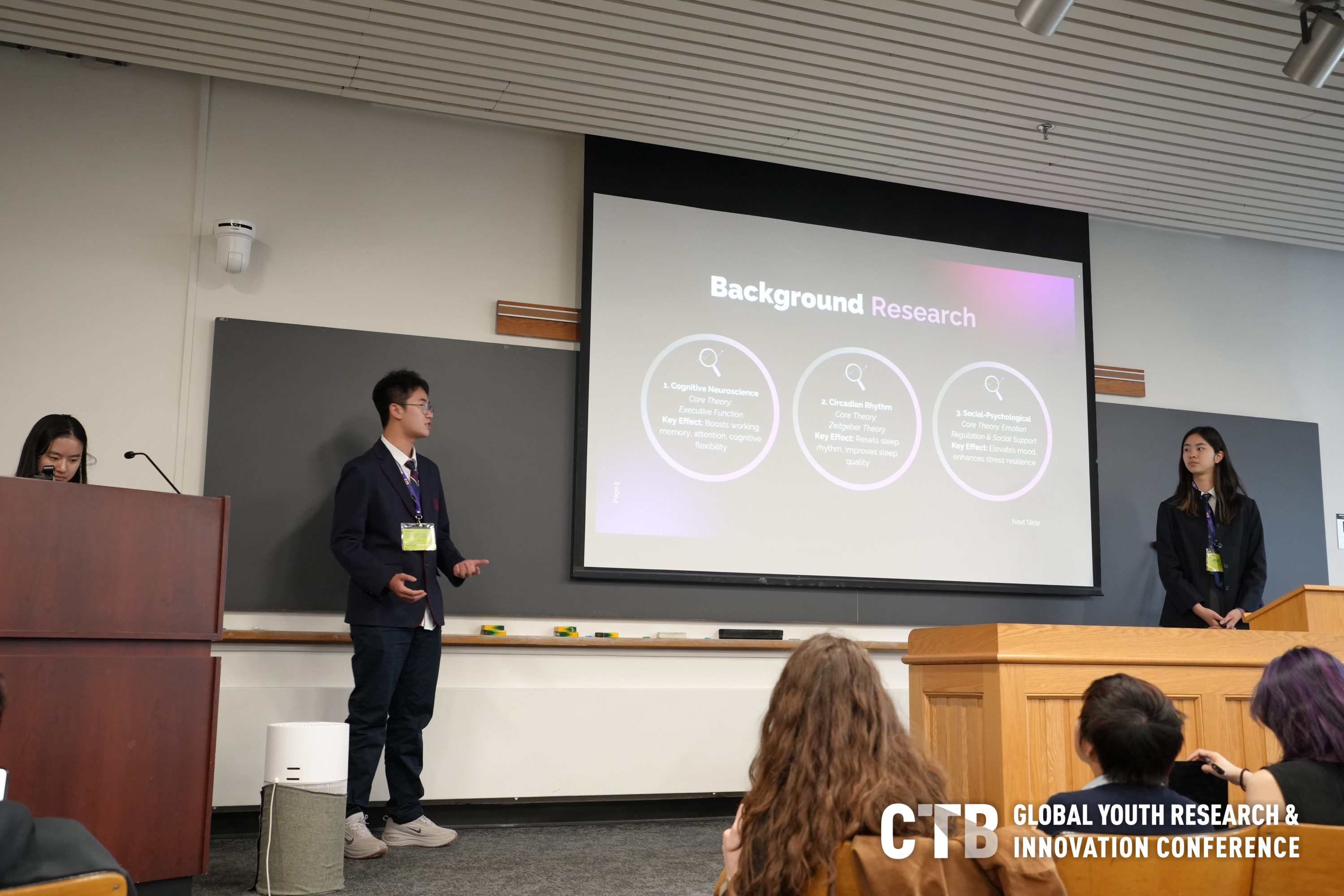
A: Our project is titled "The Impact Mechanisms of Physical Exercise on Adolescent Academic Performance and Mental Health: An Analysis Based on Heterogeneity Perspectives." Over six months, we investigated how exercise actually influences learning. We discovered that exercise improves sleep quality, which enhances cognitive brain functions, ultimately leading to better academic results.
My initial role focused on conducting the literature review regarding sleep. By the National Finals, I took the lead on presenting the Literature Review and Research Gaps.
During the Global Finals at Harvard, since our team was represented by only two members, we divided the presentation equally. I was responsible for presenting the Literature Review, Research Gaps, Methodology, and two of our three core findings.
Q: Was there a particular finding that surprised you?
A: Yes. Many people assume exercise improves grades simply by making students happier (the emotional route). However, our data showed that the academic boost comes primarily through cognitive and neurological improvements rather than just mood enhancement.
Q: I heard your team also won the Hackathon at Harvard. How did that happen?
A: That was a fun challenge! We formed a temporary team on campus to solve a real-world problem using biomimicry. There is a famous statue at Harvard (the John Harvard statue) where everyone touches the foot for good luck. Unfortunately, it’s quite unsanitary.
To solve this, we proposed using a shark-skin-inspired texture, which is naturally antimicrobial. Our plan was to 3D-print a translucent membrane with this microscopic shark-skin structure to cover the foot. This would prevent bacterial growth while still allowing visitors to keep the tradition of touching the statue.
Q: Did you encounter any significant challenges during this process? How did you overcome them?
A: The biggest challenge was the public speaking. I am naturally introverted and wasn't very confident in my presentation skills. Delivering a long, memorized speech in front of a large audience—while coordinating seamlessly with a teammate—was daunting.
While in the U.S., my teammate and I rehearsed late into the night every day leading up to the finals. The pressure was intense because our original team had eight or nine members with specialized roles; however, since only two of us could travel to Harvard, we had to take on all the content ourselves.
I found that thorough preparation is the best cure for anxiety. I memorized the material until it was "engraved" in my mind. By the time I stepped onto the stage as the penultimate presenter, my introversion faded away. Because I had practiced so much, the words flowed naturally. I felt a great sense of relief knowing I hadn't let my team down.
Q: Looking back at the past six months and the trip to Harvard, what was your biggest takeaway?
A: My biggest takeaway was the shift in my perspective. Before this research, I thought "exercise improves grades" was just common sense. Through this project, I discovered the complex theories and mechanisms behind it—how sleep and brain function act as critical intermediaries.
Beyond the academic knowledge, I also saw significant growth in my leadership and collaboration skills. I initially went in with low expectations, hoping for perhaps a second or third-place finish. Winning first place was a powerful validation of our hard work and teamwork. It was also incredibly eye-opening to see the high caliber of projects from other teams during the Global Showcase.
Q: What sports do you enjoy at school?
A: I’ve always loved soccer. I enjoy team sports because they allow me to meet new friends and experience the thrill of working together toward a common goal on the field.
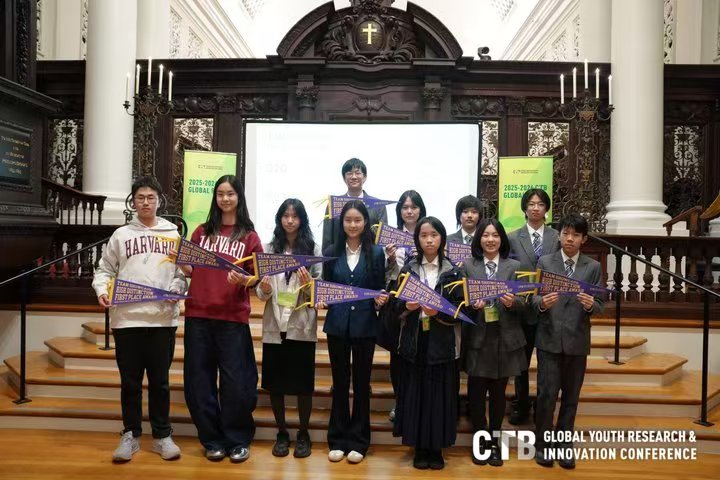
Grade 10 student Yuxuan Yang demonstrated a rare courage: the willingness to take the first step when the path was completely unclear and the determination to master every unfamiliar stage of the research process himself.
In an environment without explicit instructions, Yuxuan relied on deep literature reviews, AI-assisted inquiries, and constant trial and error. He pieced together scattered tools into a cohesive logical framework of his own making. On the many nights when data stalled and the road ahead seemed to end—even during the Spring Festival—he remained at his desk. He endured countless fruitless restarts, all for the sake of that single breakthrough: the moment he could finally say, "Now, I can move the analysis forward."
This courage to build from "0 to 1," the resilience to withstand loneliness and failure, and a sincere commitment to proactive action rather than passive waiting—these are the most brilliant milestones of his growth.
Q: Could you describe your research project and its specific focus?
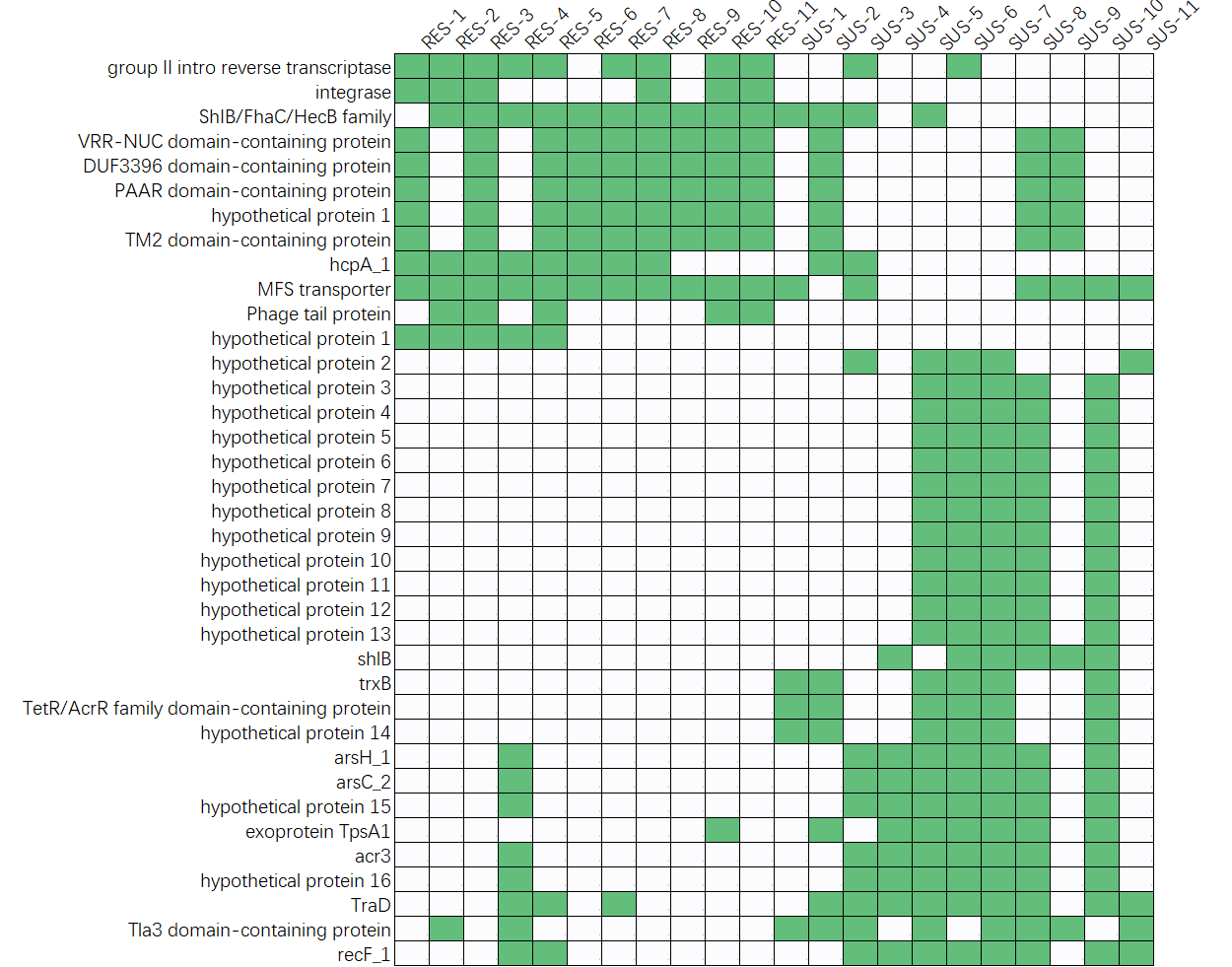
A: My project is titled "Genomic Analysis of Resistance Mechanisms in Pseudomonas aeruginosa to Ceftazidime." Simply put, I investigated which specific genes contribute to this bacterium's antibiotic resistance. Using a genomics-based approach, I analyzed how certain genetic sequences allow the bacteria to resist Ceftazidime, a common antibiotic.
This was largely an independent project. My relationship with my mentor was similar to that of a graduate student and advisor; while I received high-level guidance when stuck, I executed the vast majority of the tasks myself.
Q: Did your research involve laboratory work, or was it primarily computational?
A: It was a "dry lab" project based on statistics and bioinformatics. Since I was working with pathogenic bacteria, direct "wet lab" experimentation isn't typically accessible or permitted for high school students.
However, the biological components were quite rigorous. For example, I performed protein sequence modeling. After building these models, I used specialized computational tools to analyze the binding affinity between those proteins and the antibiotic. My key work involved mining databases for known resistance genes within my strain's genome and conducting molecular simulations to verify their functional impact.
Q: What were the most significant takeaways from this experience?
A: My biggest takeaway was gaining a concrete understanding of the research methodology. Before this, research was an abstract concept to me. By defining my own topic, executing the analysis, and synthesizing data into conclusions, I finally understand the full lifecycle of a scientific project.
I also gained deep technical knowledge. Because bioinformatics is a rapidly evolving field, I had to dive into contemporary literature—mostly papers published from 2015 onwards.
Q: How did you handle the uncertainty of an "exploratory" project?
A: I felt quite lost at the beginning. My mentor provided the tools but didn't give me a step-by-step manual; I had to establish the logic myself. I overcame this by studying how professional researchers structured their papers. I learned to simplify and adapt their methodologies into a workflow that suited my specific goals. While I couldn't perform the "wet lab" validation that professionals do, I successfully built a data-driven foundation for identifying high-probability resistance genes.
Q: Which part of the process required the most effort and energy?
A: Definitely the research design and planning. Since this was my first real project, I had no initial concept of how to structure a study. I had access to various tools, but they were scattered; I didn't know how to connect them into a cohesive logical framework.
I spent a significant amount of time consulting my mentor, utilizing AI, and researching documentation to understand the specific function of each tool and how the resulting data could be analyzed to reach a valid conclusion.
Q: Did you hit any major roadblocks during the later stages?
A: Yes, I hit a "plateau" mid-project where I felt completely stuck. I had data but didn't know how to process it, and I realized my dataset was insufficient. I spent weeks trial-and-erroring different methods. I even worked through the Spring Festival to finalize the analysis and write the paper.
There were many dead ends. Sometimes I would run complex data only to realize it was unusable, which was incredibly frustrating. My solution was to pivot—attacking the problem from different angles until a method yielded a meaningful result. I learned to evaluate data based on its potential to drive the analysis forward.
Q: What are your plans for the future of this research?
A: While I plan to participate in more research competitions, I likely won't continue with this specific topic. Advancing it further would require either massive data expansion or "wet lab" validation, which limits my current room for growth. I’m excited to start a new project in a different area of Biology or Chemistry that aligns with my evolving interests.